 Our Providers
 Blog
Blog
 Contact us
 Root Canal Treatment
 Emergency Root Canal
 Root Canal Retreatment
Calcified Root Canal Treatment in NYC
Root Canal Services for Calcified Teeth in NYC
While most root canal treatments are routine procedures, there are a few complications that can make them more challenging.
Calcified canals are one such issue, which is why seeing an endodontist is crucial for tooth-related problems. When a canal becomes calcified, the soft tissue inside the tooth can become more difficult to locate, visualize and treat.
So, a specialized class of root canal treatment called a calcified root canal is necessary.
At Midtown Endodontist NYC in New York City’s Midtown East neighborhood, Dr. Steven Lipner uses state-of-the-art root canal equipment to perform this complicated root canal therapy. If you have calcified canals, seeing an NYC endodontist specializing in calcified root canal treatment is a must.
Schedule your consultation to discuss treatment for your calcified canals today.
Jump to:
- What Is a Calcified Root Canal?
- What Causes a Calcified Root Canal?
- What Is the Process for a Calcified Root Canal Treatment?

What Is a Calcified Root Canal?
The Calcification Of Teeth
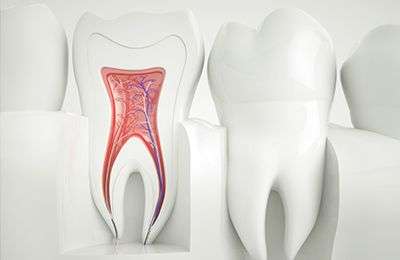
Calcified root canals or blocked canals occur when calcium gets deposited in the tooth’s canal. The tooth canal is the space in the middle of its root. In healthy teeth, this space contains pulp tissue, which is mainly made up of nerve and vascular tissue.
Calcification causes the canal space to shrink.
When a patient requires a root canal, the lack of space and visibility makes it difficult for even the smallest tools to clean out the infection.
What Causes a Calcified Root Canal and What Are the Symptoms?
As the name suggests, the tooth’s root canal becomes calcified because of calcium deposits. This teeth calcification can occur over time, becoming an issue later in life. However, sometimes the body attempts to shrink the pulp space in the tooth by calcification due to trauma or disease.
A few other reasons a root can become calcified include:
- Age: There is a growing number of patients experiencing calcified root canals due to aging. As people live longer with their natural teeth, a tooth’s canal can naturally calcify with time.
- Longstanding tooth decay: If a patient has a large amount of tooth decay, your body can shrink the size of the pulp in the tooth’s canal for protection. This shrinking, however, means the pulp receives less blood supply. Reduced blood supply increases the risk of infection, which will require a calcified root canal treatment.
- Trauma: As sports activity increases among school-aged children, this has led more young patients to experience tooth damage due to a facial injury. When a tooth suffers a blow, this may cause bleeding in the canals, which can become a focal point for calcification.
What Is the Process for a Calcified Root Canal Procedure?
Cleaning out a calcified root canal takes much more skill, time and patience than a standard root canal procedure or endodontic treatment.
When you come to Midtown Endodontist NYC, our root canal specialists achieve successful calcified root canal treatments by finding all the canals in the affected tooth and cleaning them out.
A general dentist, in comparison, may find it challenging to complete a calcified root canal procedure because they do not have the right equipment.
By visiting a skilled NYC endodontist like Dr. Steven Lipner at Root Canal specialist practicing in Midtown NYC, you can take advantage of his advanced skills in dealing with more specialized root canal treatments, such as calcified root canals.
We also utilize technological advances to ensure high-quality treatment and results, such as:
- Digital X-rays: These X-rays shows us where to start looking for calcified canals by providing clarity and spatial orientation. With the aid of digital X-rays, we remove less tooth structure and retain the structural integrity of the tooth.
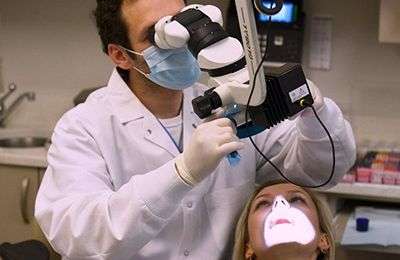
- High-powered microscope: This indispensable piece of endodontic equipment provides high-powered magnification, which helps us find calcified canals that are otherwise almost invisible.
- High-end rotary system: The calcified canal must receive prepping, cleaning and shaping with a precision tool to promote healing. Our high-end rotary system ensures the best results.
During a calcified root canal treatment, Dr. Lipner uses a methodical approach, slowly negotiating down the calcified root canal system and flushing out all the debris inside.
Calcified Root Canal FAQ
If your endodontist has recommended a calcified root canal procedure, you may have a lot of questions. Here are some of the most frequently asked questions we receive from patients at Midtown Endodontist NYC.
What does calcification of teeth mean?
Calcium is the most abundant mineral in the human body, and the majority is stored in bones and teeth. In fact, tooth enamel is made up of calcified tissue. Calcification of teeth can refer to plaque or tartar that collects on teeth and causes decay as well as issues with the calcification of tooth enamel.
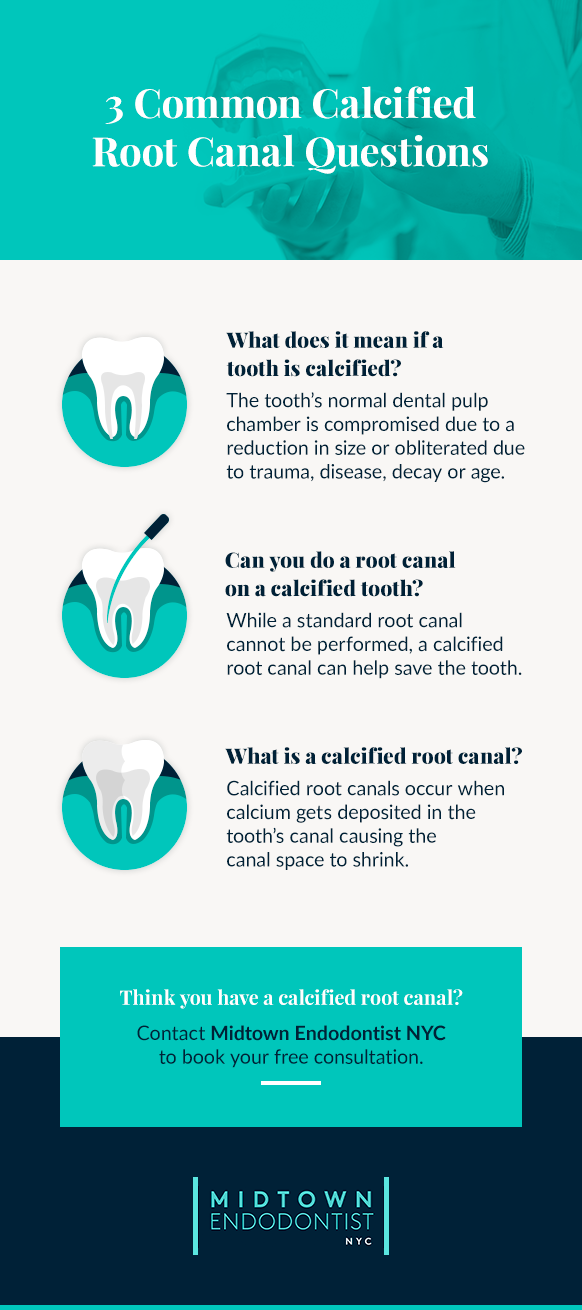
What does it mean if a tooth is calcified?
The term “calcified tooth” means a tooth’s normal dental pulp chamber is compromised due to a reduction in size or obliterated due to trauma, disease, decay or age. The root canal space should contain pulp, but a calcified tooth’s chamber fills with hard calcified tissue.
Can a calcified tooth be saved?
Even if your calcified tooth cannot be treated with a traditional root canal, your endodontist may still be able to save your tooth with a calcified root canal. The process takes more time and patience, but when performed by a skilled endodontist, your tooth can be saved.
Can you do a root canal on a calcified tooth?
A standard root canal cannot be performed on a calcified tooth. However, if your endodontist discovers that a canal has become calcified, a calcified root canal can help save the tooth. This specialized form of root canal therapy can be performed on a calcified tooth, even if the soft tissue within is more difficult to locate, visualize and treat.
What is a calcified root canal?
Calcified root canals (also described as blocked canals) occur when calcium gets deposited in the tooth’s canal, which is the space in the middle of the tooth’s root. In healthy teeth, this space contains pulp tissue made up mainly of nerve and vascular tissue. Calcification causes the canal space to shrink, making it difficult to locate, visualize, and treat the soft tissue inside the tooth during root canal treatment.
What causes a calcified root canal?
Calcified root canals occur due to calcium deposits. This can happen gradually over time and become an issue later in life, and the body may also calcify the pulp space due to trauma or disease. Additional causes include aging, longstanding tooth decay (where the body shrinks the pulp space for protection, reducing blood supply and increasing infection risk), and trauma that can cause bleeding in the canals and become a focal point for calcification.
Why is calcified root canal treatment more challenging than a standard root canal?
Cleaning out a calcified root canal takes much more skill, time, and patience than a standard root canal procedure because the reduced canal space and lack of visibility make it difficult for instruments to clean out infection. A general dentist may find it challenging to complete a calcified root canal procedure without the right equipment.
What is the process for a calcified root canal procedure?
Successful calcified root canal treatment involves finding all canals in the affected tooth and cleaning them out. Technological advances such as digital X-rays help determine where to start while preserving tooth structure, a high-powered microscope helps find calcified canals that are almost invisible, and a high-end rotary system is used to prep, clean, and shape the canal. Treatment follows a methodical approach, slowly negotiating down the calcified root canal system and flushing out debris.
Why are digital X-rays used for calcified root canal treatment?
Digital X-rays are used to show where to start looking for calcified canals by providing clarity and spatial orientation. With the aid of digital X-rays, the provider can remove less tooth structure and retain the structural integrity of the tooth.
Why is a high-powered microscope used for calcified root canals?
A high-powered microscope provides high-powered magnification to help locate calcified canals that are otherwise almost invisible.
Schedule Your Calcified Root Canal Treatment in NYC
Whether you would like a second opinion to confirm you calcified root canal diagnosis or are struggling with tooth pain and require endodontic care in New York City, we invite you to book your consultation at Midtown Endodontist NYC today to discuss treatment options for your oral health, the cost of a calcified root canal, and learn if a calcified root canal procedure is the right treatment for you.
Author: Dr. Steven Lipner