If you’ve been told you might need a root canal by your dentist or are experiencing a persistent and severe toothache, you’re not alone. Many people feel nervous about this treatment, but in reality, a root canal is often the quickest way to relieve pain and save a tooth that’s badly infected or damaged.
Our experienced team of endodontists in NYC is here to make the process as comfortable, informed, and stress-free as possible.
What Is a Root Canal?
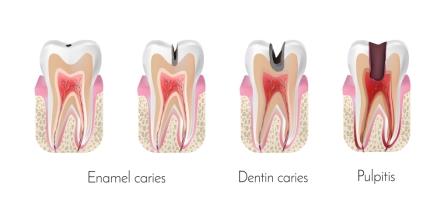
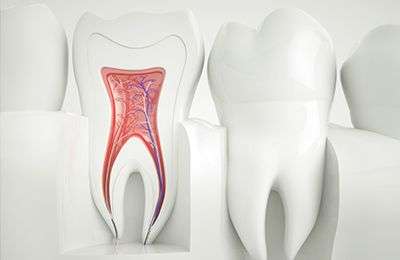
A root canal is a treatment designed to save your natural tooth when it’s affected by infection or damage. Inside each tooth is a soft layer called the pulp, which contains nerves, blood vessels, and connective tissue. When the pulp becomes inflamed or infected, it can lead to pain, swelling, and, if left untreated, even tooth loss. After the inside of the tooth is restored, a crown or filling is recommended to protect the tooth and allow you to chew comfortably again. This procedure is very similar to a routine filling and can typically be completed in one to two visits, depending on the condition of your tooth.

Signs You Might Need a Root Canal
Contact us for an evaluation if you notice:
- Ongoing tooth pain, especially when chewing or biting
- Sensitivity to hot or cold that lingers after the temperature changes
- Swelling or tenderness in your gums
- Darkening or discoloration of a tooth
- A chipped or cracked tooth
- Unexplained pain in your teeth or jaw
- Pain while lying vertically
The Root Canal Process
Every patient’s needs are different, but here’s what you can typically expect:
- Initial Exam & Digital X-rays: We check the tooth and the surrounding area.
- Anesthesia: Local numbing or optional sedation to keep you relaxed.
- Access & Cleaning: A small opening is made in the tooth to remove the infection.
- Sealing: The inside is filled with a special material to keep bacteria out.
- Temporary Protection: A filling is placed until your permanent crown is ready.
- Final Restoration: A crown is placed to strengthen and protect the tooth.
While most treatments take about 60–90 minutes, some cases may take longer or require a second visit.
Why a Crown Matters After a Root Canal
Once the inside of a tooth is cleaned, it becomes more fragile. A crown protects it from breaking and helps it last for many years. Skipping this step can lead to fractures or the need for extraction later.
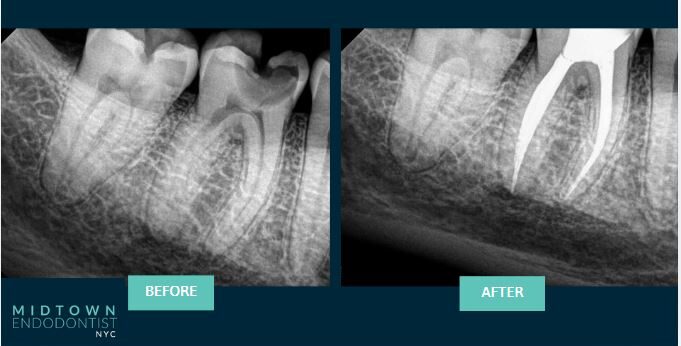
Root Canal Before and After
Do Root Canals Hurt?
Depending on the severity of the infection, there may be discomfort and sometimes pain. Dr. Lipner and his assistant work hard to ensure you remain comfortable throughout your procedure and undergo a pain-free root canal procedure. Many patients are surprised at how easy the process feels:
Dr. Lipner’s root canal procedure was painless and he took great care and precision throughout the entire procedure telling me what he was doing. – Ricky
Dr. Lipner took his time every step of the way to make sure that I wasn’t experiencing any pain. – Jordan
The entire procedure was, believe it or not, completely pain free! I left the office visit with some scripts for strong pain relievers but ended up not needing them at all. – Lily
Choosing the Right Root Canal Specialist in New York City
While general dentists can perform root canals, endodontists are specialists who focus on these treatments every day. Our root canal specialist in NYC uses advanced tools like an endodontic microscope to find hidden canals and improve treatment success.
Schedule A Root Canal Consultation Today
If you’re experiencing tooth pain or think you might need a root canal, don’t wait. Early treatment can save your tooth and prevent further problems.
Frequently Asked Questions (FAQ)
What is root canal therapy?
Root canal treatment is a dental procedure that is used to treat dental pain or infection caused by the inflamed or dead nerve, a condition called pulpitis.
Do I need a root canal crown?
The crown or another type of dental restoration is required to complete the care of the compromised tooth.
Does the root canal hurt?
Depending on the severity of the infection there may be discomfort and sometimes pain.
What is a root canal?
A root canal is a treatment designed to save your natural tooth when it’s affected by infection or damage. Inside each tooth is a soft layer called the pulp, which contains nerves, blood vessels, and connective tissue. When the pulp becomes inflamed or infected, it can lead to pain, swelling, and, if left untreated, even tooth loss. After the inside of the tooth is restored, a crown or filling is recommended to protect the tooth and allow you to chew comfortably again. This procedure is very similar to a routine filling and can typically be completed in one to two visits, depending on the condition of your tooth.
What are signs you might need a root canal?
Signs you might need a root canal can include ongoing tooth pain (especially when chewing or biting), sensitivity to hot or cold that lingers, swelling or tenderness in the gums, darkening or discoloration of a tooth, a chipped or cracked tooth, unexplained pain in your teeth or jaw, or pain while lying vertically.
What is the root canal process?
A typical root canal process includes an initial exam and digital X-rays, local anesthesia (with optional sedation), making a small opening in the tooth to remove infection, cleaning the canals, sealing the inside with a special material to keep bacteria out, placing a temporary filling until the permanent crown is ready, and then completing the final restoration with a crown to strengthen and protect the tooth.
How long does a root canal take?
Root canals typically take between 60 and 90 minutes to complete, depending on the complexity and the extent of infection. In some cases, two visits may be required for more complicated treatments.
Why does a crown matter after a root canal?
After the inside of a tooth is cleaned, it becomes more fragile. A crown helps protect the tooth from breaking and can help it last for many years. Skipping this step can lead to fractures or the need for extraction later.
How much do root canals cost in NYC?
The practice accepts many major dental insurance plans and offers transparent pricing. Without insurance, root canal treatment with a specialist typically starts at $1,100. The total cost can vary based on the tooth being treated, whether it is an initial root canal or a retreatment, additional treatments such as a crown or digital X-ray, whether you see a general dentist or an endodontist, and your insurance coverage.
What kinds of complications can arise during root canal treatment?
While root canals are generally safe and effective, complications can occur and may lead to failed treatment. These can include infection, a fracture or crack in the tooth, or incomplete removal of infected pulp. Other uncommon issues include an allergic reaction to materials used or persistent pain due to inflammation. The practice aims to prevent complications as much as possible using an endoscopic microscope.
What does recovery look like after root canal treatment?
The page directs patients to read the practice’s guide to post-treatment care for root canals for information on recovery after treatment.
Should I see an endodontist or a general dentist for a root canal?
General dentists can perform root canals, but endodontists are specialists who focus on these treatments every day. The NYC office uses advanced tools like an endodontic microscope to find hidden canals and improve treatment success.
Schedule an appointment today!
Book Online
(212) 880-2700
 Our Providers
 Blog
Blog
 Contact us
 Endodontics
 Root Canal Treatment
 Emergency Root Canal
 Root Canal Retreatment
 Complimentary Teeth Whitening
 Teeth Whitening