Do I Need A Root Canal If My Tooth Is Dead?

Treating a Non-Vital (Dead) Tooth in NYC
A non-vital or “dead” tooth occurs when bacteria invade the nerve center of the tooth, causing the internal tissue to die. Left untreated, a non-vital tooth can lead to painful pressure, swelling, and bone loss. However, having a non-vital tooth does not mean you have to lose it. At Midtown Endodontist NYC, Dr. Steven Lipner, Dr. Chiyoon Ahn, and our endodontic specialists use advanced surgical microscopes and 3D imaging to clean and seal non-vital teeth, eliminating infection and preserving your natural smile.
At Midtown Endodontist NYC, we specialize in comprehensive endodontic care, including root canal therapy, root canal retreatments, apicoectomies, and emergency dental care. Our specialists prioritize clear patient communication to ensure you feel informed and comfortable throughout your treatment.
What Is a Dead Tooth?
A tooth is considered dead when the living tissue in the center of the tooth is invaded by bacteria and causes the tissue to necrose (die). The living tissue is composed of an artery, a vein, and a nerve. We call this organic tissue the pulp. It lies in the center of the tooth. It goes from the crown of the tooth to the very tip of the roots.
Symptoms and Treatment Options for a Dead Tooth
When deep decay, a cracked tooth, or dental trauma exposes the pulp chamber to bacteria, irreversible infection sets in. Antibiotics alone cannot cure an infection inside a non-vital tooth because the lack of blood flow prevents the medication from reaching the inside of the root canals.
When a tooth becomes non-vital, you face two primary choices:
- Root Canal Therapy: The conservative endodontic choice that removes the infection, cleans the root system, and saves your natural tooth.
- Tooth Extraction: Removing the tooth entirely, which typically requires a subsequent dental implant or bridge to restore chewing function and prevent adjacent teeth from shifting.
Common Signs of a Dead Tooth
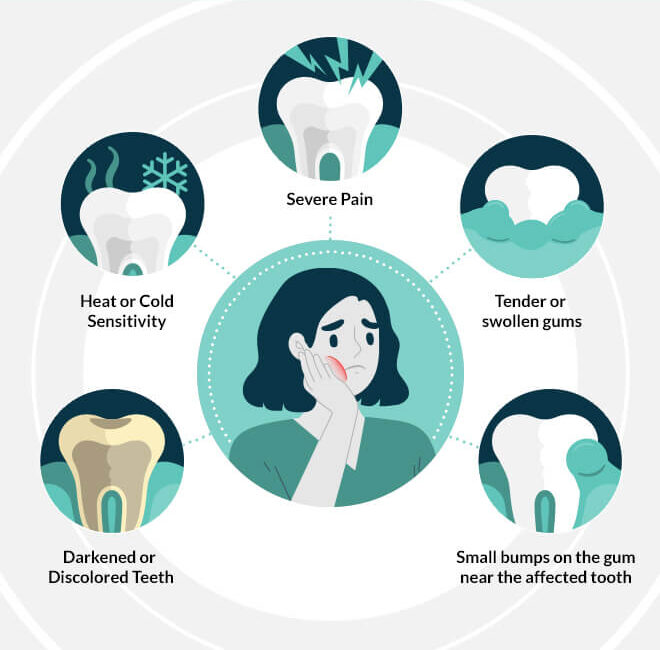
When an infected pulp dies, pressure and buildup can develop inside the root system and spread into the surrounding jawbone, potentially forming an abscess. Common symptoms include:
- Throbbing pain, especially when lying down or during changes in body pressure
- Sensitivity or localized pain when chewing or pressing on the tooth
- Swelling, tenderness, or a small pimple (fistula) on the nearby gum tissue
- Dark discoloration or graying of the natural tooth structure
- Lingering pain triggered by hot foods or beverages (or a complete lack of sensation to temperature)
Seeking specialized endodontic care early makes treatment straightforward and speeds your recovery.
How Root Canal Therapy Can Help Save a Dead Tooth
Even though the nerve inside a non-vital tooth is no longer functioning, the physical tooth structure remains firmly anchored in your jawbone. Root canal therapy is designed to save this natural foundation by removing the internal bacterial infection and permanently sealing the root channels, allowing you to keep your natural bite without needing an extraction.
Here is how root canal treatment works to preserve a non-vital tooth:
- Eliminates the Infection Source: Under high-powered operating microscopes, our endodontists access the center of the tooth to remove dead pulp tissue, bacterial biofilms, and microscopic debris from the root channels.
- Disinfects the Internal Root System: The canals are irrigated with specialized antimicrobial solutions to neutralize lingering bacteria and relieve localized pressure inside the tooth and surrounding jawbone.
- Seals Against Reinfection: Once sanitized, the root channels are filled with a biocompatible material called gutta-percha and sealed tightly. This step prevents new bacteria from entering the root system or escaping into the surrounding bone.
- Preserves Natural Bone and Alignment: Keeping your natural root in place preserves your native jawbone density and prevents adjacent teeth from shifting out of alignment, which often occurs after a tooth extraction.
- Restores Strength and Appearance: Following successful endodontic treatment, your general dentist places a protective crown or restoration over the tooth, restoring its natural appearance, structural integrity, and chewing function.
Specialized Care at Midtown Endodontist NYC
At Midtown Endodontist NYC, Dr. Lipner, Dr. Ahn, and our entire endodontic team bring extensive experience to treating simple, acute, and complex root canal cases. We prioritize patient comfort and transparent care to help you keep your natural teeth for a lifetime.
Schedule an Appointment for Your Root Canal Evaluation at Midtown Endodontist NYC Today
BOOK AN APPOINTMENT