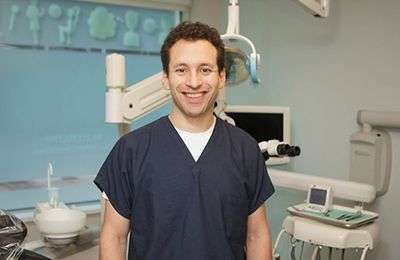
 Our Providers
 Blog
Blog
 Contact us
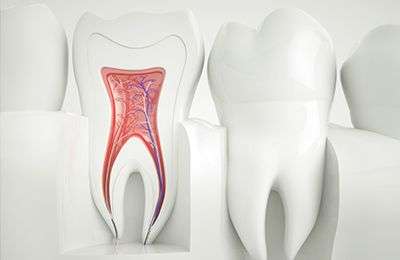 Root Canal Treatment
 Emergency Root Canal
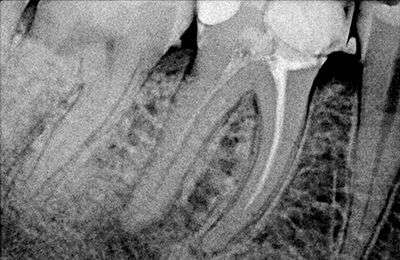 Root Canal Retreatment
Apicoectomy Procedure NYC

Apicoectomy (Endodontic Microsurgery) in NYC
An apicoectomy, also known as endodontic microsurgery, is a minor surgical procedure that removes an infected root tip to save a natural tooth after a previous root canal fails. It is often the preferred choice for clearing persistent infections when your tooth has a permanent crown or a deep metal post that makes standard retreatment too risky. While recovery is typically quick, the long-term success of the procedure depends heavily on the structural strength of your root. At Midtown Endodontist NYC, our specialists use 3D CBCT imaging to evaluate if your tooth is crack-free and structurally sound before recommending microsurgery, helping to make your clinical outcome as predictable as possible.
At Midtown Endodontist NYC, we specialize in comprehensive endodontic care, including apicoectomies, root canal therapy, root canal retreatments, and emergency endodontic procedures. Our experienced specialists prioritize clear communication to ensure every patient stays informed about their dental health and treatment options.
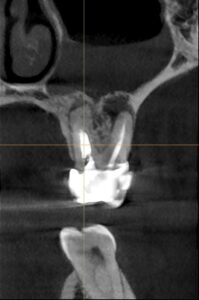

What Is an Apicoectomy?
Unlike standard root canal therapy, which accesses the inside of the tooth through the chewing surface, an apicoectomy treats the problem from the outside, directly at the tip of the root (the apex).
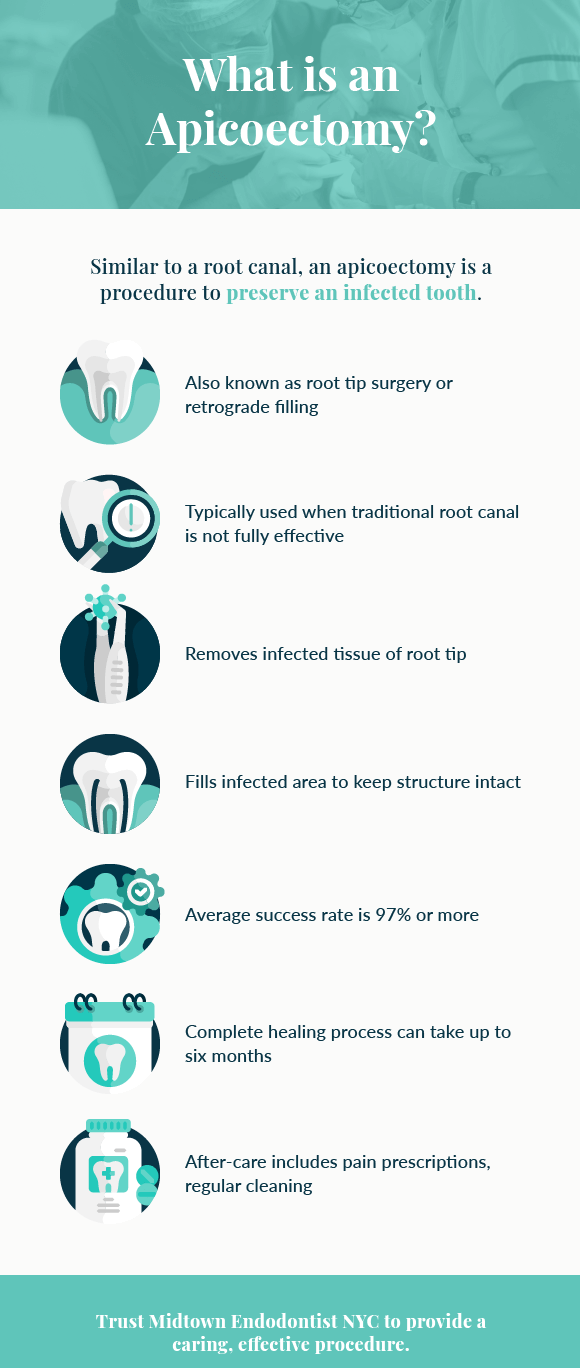
Step-by-Step: Modern Endodontic Microsurgery
- 3D CBCT Imaging: Before treatment, we take a limited-field 3D cone-beam scan to map your root anatomy, surrounding bone volume, and proximity to adjacent anatomical structures (such as the sinus or nerves).
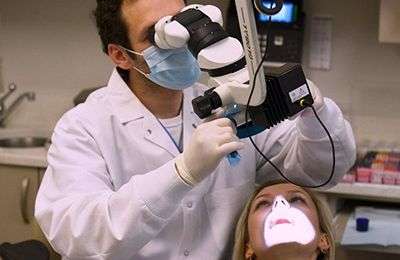
- Microscopic Access: Under profound local anesthesia, our endodontist makes a minor incision in the gum near the root to expose the underlying bone and localized infection.
- Root-Tip Resection (Apex Amputation): Under 16x to 25x magnification through a surgical operating microscope, we resect approximately 3 millimeters of the root tip. This step is vital because the final 3 mm of a root branches into complex microscopic side canals and deltas where persistent bacteria hide.
- Ultrasonic Debridement & Bioceramic Retro-Seal: We prepare a small channel into the cut root face using delicate ultrasonic instruments, then seal it with a biocompatible material (such as Mineral Trioxide Aggregate or bioceramic cement). This creates a strong seal designed to help prevent bacteria from escaping into the surrounding jawbone.
- Bone Regeneration & Closure: If the infection created a hollow space in your jawbone, we may place a bone graft and protective barrier membrane to encourage native bone rebuilding. We then close the site with fine microsurgical sutures.
Apicoectomy vs. Non-Surgical Root Canal Retreatment
When a previously treated root canal develops a recurrent problem, endodontists typically evaluate two options to save the tooth: non-surgical root canal retreatment or surgical apicoectomy. Both procedures have high clinical success rates, but they address different challenges:
Non-Surgical Root Canal Retreatment (From the Top)
The endodontist re-enters the tooth through the top (the crown), removes the previous root canal filling material, disinfects the entire canal length, and reseals it.
Best when:
- A canal was missed or underfilled during the first procedure.
- The existing crown is loose, damaged, or leaking and requires replacement.
- The infection stems from bacteria inside the upper or middle portions of the root.
Apicoectomy / Microsurgery (From the Root Tip)
An apicoectomy bypasses the crown entirely, addressing the root tip directly through the gum tissue.
Best when:
- You have an intact crown or bridge: An apicoectomy is designed to preserve your existing restoration without drilling a hole through it.
- The tooth has a post and core: Attempting to drill out a cemented metal or fiber post from above carries a high risk of cracking the root.
- The canal is blocked or calcified: If a canal has curved anatomy, separated instruments, or severe calcification that cannot be navigated from above, an apicoectomy treats the problem right at the apex.
- The infection is confined to the apex: We can target persistent bacterial biofilms located in the apical delta by resecting the tip and placing a retrograde seal.
Success Rates and Long-Term Predictability
Historically, older “traditional” apicoectomies performed without magnification had unpredictable results. Modern endodontic microsurgery (EMS) using operating microscopes and bioceramic cements has significantly improved clinical outcomes:
- Infection Clearance: Clinical studies indicate that a high percentage of periapical bone lesions show significant healing on follow-up X-rays within 12 to 24 months.
- Tooth Longevity: Long-term research suggests that most teeth treated with modern microsurgery remain healthy and functional for many years.
Important Note on Structural Health: An apicoectomy addresses bacterial infection, but it cannot fix structural weakness. If a tooth is heavily hollowed out, lacks a strong collar of natural tooth structure under the crown, or develops a vertical hairline crack, it remains vulnerable to fracture under heavy bite forces. Our team uses 3D CBCT imaging prior to surgery to evaluate if your tooth is structurally sound enough to warrant the procedure.
Costs for an Apicoectomy in NYC
Many online resources quote an apicoectomy as a standalone surgical fee of $900 to $1,300. However, that figure usually covers only the basic cutting of the root tip and excludes essential steps required for modern microsurgery. In NYC Apicoectomy treatment typically falls in the range of of $3,000 to $5,000 total out-of-pocket (without insurance), depending on:
- The tooth location: Anterior (front) teeth are generally less complex than multi-rooted molars.
- Advanced 3D Imaging: Pre-surgical CBCT scans ensure safety and precision.
- Bioceramic Retrograde Seal: Sealing the root face with bioactive materials.
- Bone Grafting & Membranes: Rebuilding bone in larger surgical defects where infection has eroded the cortical plate.
- The tooth location: Anterior (front) teeth are generally less complex than multi-rooted molars.
- Advanced 3D Imaging: Pre-surgical CBCT scans help plan a safe and precise procedure.
- Bioceramic Retrograde Seal: Sealing the root face with bioactive materials.
- Bone Grafting & Membranes: Rebuilding bone in larger surgical defects where infection has eroded the cortical plate.
Dental Insurance
Most PPO dental insurance policies cover a significant portion of the primary surgical fees (the root resection and the retrograde filling) under major endodontic benefits, often paying between 50% and 80% of approved amounts. Our financial team verifies your plan in advance so you receive a transparent estimate before any treatment begins.
Financial Options and Insurance at Midtown Endodontist NYC
We believe in transparent pricing and making specialized endodontic care accessible. Here is what you can expect regarding the financial aspects of your visit to our Manhattan office:
Consultation Fee
Our initial endodontic consultation fee is $150. If you proceed with treatment at our practice, we will credit this $150 fee directly toward the total cost of your procedure.
Insurance Claims Handled for You
Dental insurance can be complex. Our financial coordinators will verify your benefits in advance and file all claims on your behalf, so you do not have to worry about the paperwork.
Interest-Free Financing
We partner with CareCredit to offer 6-month interest-free financing for qualifying patients, allowing you to get the care you need right away while breaking the cost into manageable monthly payments.
FSA and HSA Accepted
You can conveniently use your Flexible Spending Account (FSA) or Health Savings Account (HSA) funds to pay for your consultation, insurance copays, or out-of-pocket treatment costs.
Recovery: What to Expect
Recovery from modern microsurgery is generally quick and manageable for most patients:
- First 24 to 48 Hours: Mild swelling and tenderness are common and typically peak on the second day. Most patients manage this comfortably with over-the-counter pain relievers (like ibuprofen or acetaminophen) and cold compresses.
- Return to Routine: Many individuals return to work and light daily activities within 24 to 48 hours. We recommend avoiding strenuous exercise for 3 to 5 days.
- Suture Removal: We remove delicate microsurgical sutures during a quick checkup within 3 to 7 days, or they dissolve on their own.
- Bone Remineralization: While you can often resume normal chewing soon after the procedure, new bone tissue continues to mature and fill the surgical space over the following 6 to 12 months.
Frequently Asked Questions
Is an apicoectomy painful?
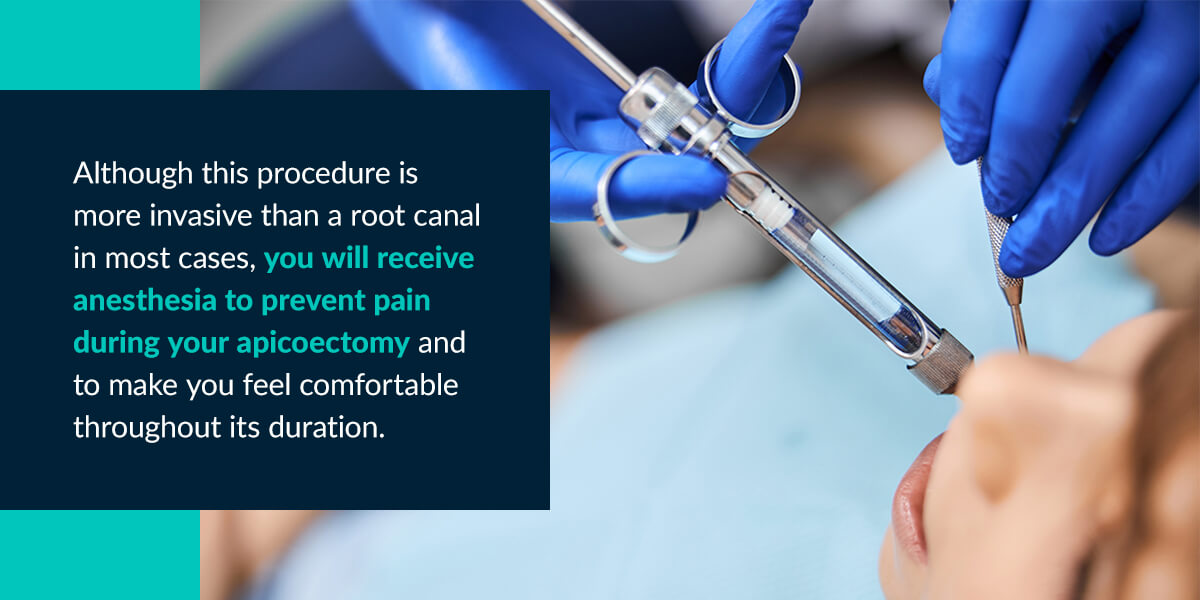
We perform the procedure under profound local anesthesia, meaning patients typically feel pressure rather than sharp pain. Nitrous oxide and relaxation options are also available for patients with dental anxiety. Post-procedure soreness is usually mild and easily managed with over-the-counter pain medication.
Will the procedure damage my existing crown?
Our goal is to protect your existing dental work. Because we access the root through the gum tissue rather than drilling through the top of your tooth, your current restoration typically remains intact and functional.
How do I know if an apicoectomy is right for me?
If you have persistent tenderness, a pimple on your gum (fistula), or an X-ray showing a shadow at the tip of a root-canaled tooth, and the tooth is otherwise solid and crack-free, an apicoectomy is often a highly conservative way to save your tooth.
Apicoectomy vs. Tooth Extraction: Which is the right choice?
The right choice depends entirely on the structural health of your tooth root. An apicoectomy saves your natural tooth and preserves your existing crown by surgically removing the infected root tip. It is highly effective and cost-efficient if your root is thick and structurally solid.
However, if your tooth has a vertical root fracture, deep decay, or is heavily hollowed out from previous dental work, an apicoectomy cannot fix that structural weakness. In structurally compromised cases, a tooth extraction followed by a dental implant provides a more predictable, long-term solution. Our specialists always use 3D CBCT scans to evaluate your tooth’s foundation before recommending microsurgery. For a complete breakdown of the long-term costs and risks, read our detailed guide on Apicoectomy vs. Dental Implants.
Schedule a Consultation at Midtown Endodontist NYC
Do not ignore lingering discomfort or a recurring infection at your root tip. Contact our Manhattan office today to schedule an evaluation with our endodontic microsurgeons.
Address: 60 East 56th Street, Suite 5F, New York, NY 10022
Phone: (212) 880-2700
Schedule an Appointment for Your Apicoectomy Evaluation at Midtown Endodontist NYC Today
BOOK AN APPOINTMENT